Q1
What is a foil balloon?
A foil balloon, also commonly called a
Mylar balloon, is made from thin polymer film
that typically has a metallized surface. Depending on the product
specification, the film may use different polymer layers and
barrier structures. Conventional constructions can include
PA/PE or PET/PE laminates, while alternative material systems
may use different formulations. The material build, sealing
method, print requirements, and intended application should be
confirmed for each product.
Explore:
Foil Balloon Materials Guide
·
Foil Balloon Knowledge Hub
Q2
Do foil balloons need helium or air?
Helium is used when a balloon needs to float freely.
Air is generally suitable for fixed decorations,
backdrops, balloon arches, and stick-mounted displays. Whether a
balloon filled with helium can float depends on its size, shape,
film and seam weight, valve, accessories, and the amount of gas
it contains. Always check the intended use and inflation guidance
for the specific balloon.
Explore:
Air-Filled vs. Helium-Filled Balloons
·
Request a Wholesale Quote
Q3
How do you inflate foil balloons?
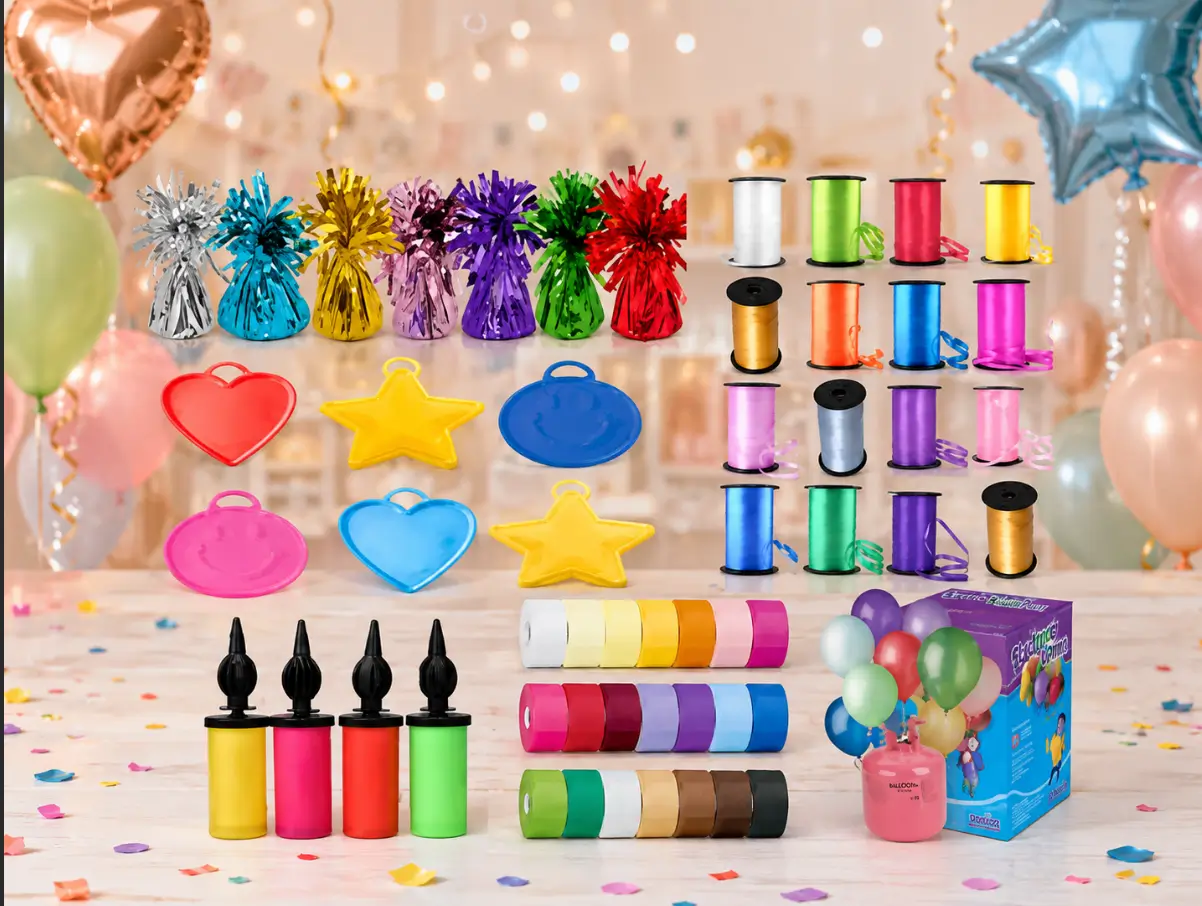
Use a compatible hand pump or inflation nozzle and locate the
balloon's designated inflation valve. Insert the nozzle gently
according to the product instructions, then inflate slowly and
evenly. Stop when the balloon reaches its intended shape; do not
force in extra gas or overinflate it. Remove the nozzle carefully
and allow the self-sealing valve to close, if the product uses
that valve design. Valve structures and instructions can vary
by model.
Explore:
Foil Balloon Inflation Guide
·
Deflation and Reuse Guide
Q4
How long do foil balloons last?
The time a foil balloon retains its shape or helium buoyancy varies
with the balloon's size, film construction, seal quality, valve
performance, inflation level, and surrounding conditions. A larger
balloon may have more lifting capacity, but its actual float
performance also depends on its weight and design. Temperature
changes can affect gas volume and balloon appearance. For wholesale
orders, confirm any required float-time or gas-retention target
against the specific SKU and agreed test conditions.
Explore:
Foil Balloon Float-Time Guide
Q5
Why won't my foil balloon float with helium?
A helium-filled balloon may not float if its available lift is
insufficient to support the combined weight of the film, seams,
valve, and attached accessories. Common factors include a small
balloon size, incomplete inflation, a heavy design, a leak, or
unsuitable filling conditions. Check that the balloon is intended
for helium use, inspect the valve and seams, and verify that the
finished balloon has enough net lift for its intended application.
Explore:
Helium Float Troubleshooting
·
Balloon Weight and Safety Guide
Q6
Why does my foil balloon deflate?
A balloon that appears to deflate may be responding to a temperature
change or losing gas through a leak. Cooler conditions can reduce
the gas volume and make a balloon look less full; its appearance
may improve again when it returns to a warmer environment. A damaged
valve, a faulty seal, or a seam leak can cause ongoing gas loss.
Inspect the valve and seams, and follow the product's handling
instructions. For quality-sensitive orders, discuss the applicable
inspection method and acceptance criteria with your supplier.
Explore:
Cold-Weather Balloon Guide
·
How to Check for Balloon Leaks

 Material Innovation